Australian Pacific Management & Training
Health
HLTAID011 Provide First Aid
Emergencies can happen anywhere, and knowing how to respond can make a critical difference. This nationally recognised Australian unit equips participants with practical first aid skills to respond confidently to common medical emergencies, injuries and life-threatening situations — from CPR and cardiac conditions to bleeding, choking, fractures and allergic reactions.
Learn emergency response for:
- CPR & AED
- Allergic reactions
- Bleeding
- Choking
- Chest pain and cardiac conditions
- Eye injuries
- Fractures
- Head, neck & spinal injuries
- Poisoning
- Seizures
- Sharps injuries
- Fever
- Vomiting & diarrhoea
- And more

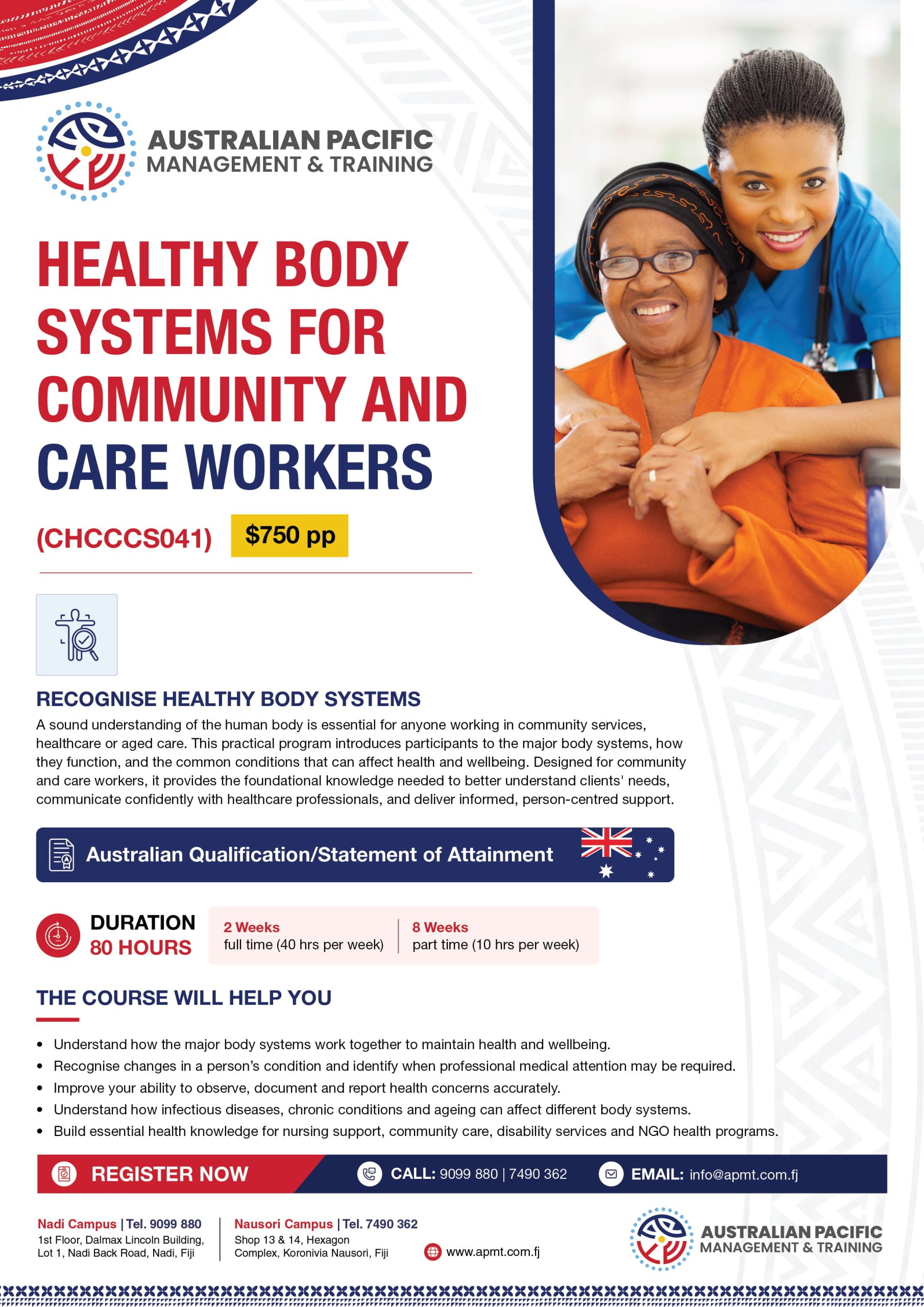
CHCCCS041 Healthy Body Systems for Community and Care Workers
A sound understanding of the human body is essential for people working across community services, healthcare and aged care. This practical program introduces the major body systems, how they function and common conditions affecting health and wellbeing, helping participants observe, communicate and report health concerns with greater knowledge and confidence.
The course will help you
- Understand how the major body systems work together to maintain health and wellbeing.
- Recognise changes in a person’s condition and identify when professional medical attention may be required.
- Improve your ability to observe, document and report health concerns accurately.
- Understand how infectious diseases, chronic conditions and ageing can affect different body systems.
- Build essential health knowledge for nursing support, community care, disability services and NGO health programs.

HLTINF006 Infection Prevention and Control for Fiji
Infection prevention and control is fundamental to safe, high-quality healthcare and community services. Designed with a strong Fiji focus, this practical program builds the knowledge and skills needed to minimise infection risks, maintain safe work practices and protect clients, patients, colleagues and communities across health, aged care and community settings.
The program will help you
- Learn how infections spread and how to break the chain of transmission.
- Apply correct hand hygiene, protective equipment, cleaning, waste disposal and exposure response procedures.
- Protect yourself, your patients, your colleagues and the wider community from preventable infections.
- Strengthen workplace responses to HIV, blood borne viruses and other infectious diseases affecting communities.
- Gain essential practical skills for hospitals, clinics, laboratories, aged care, disability services and community programs.
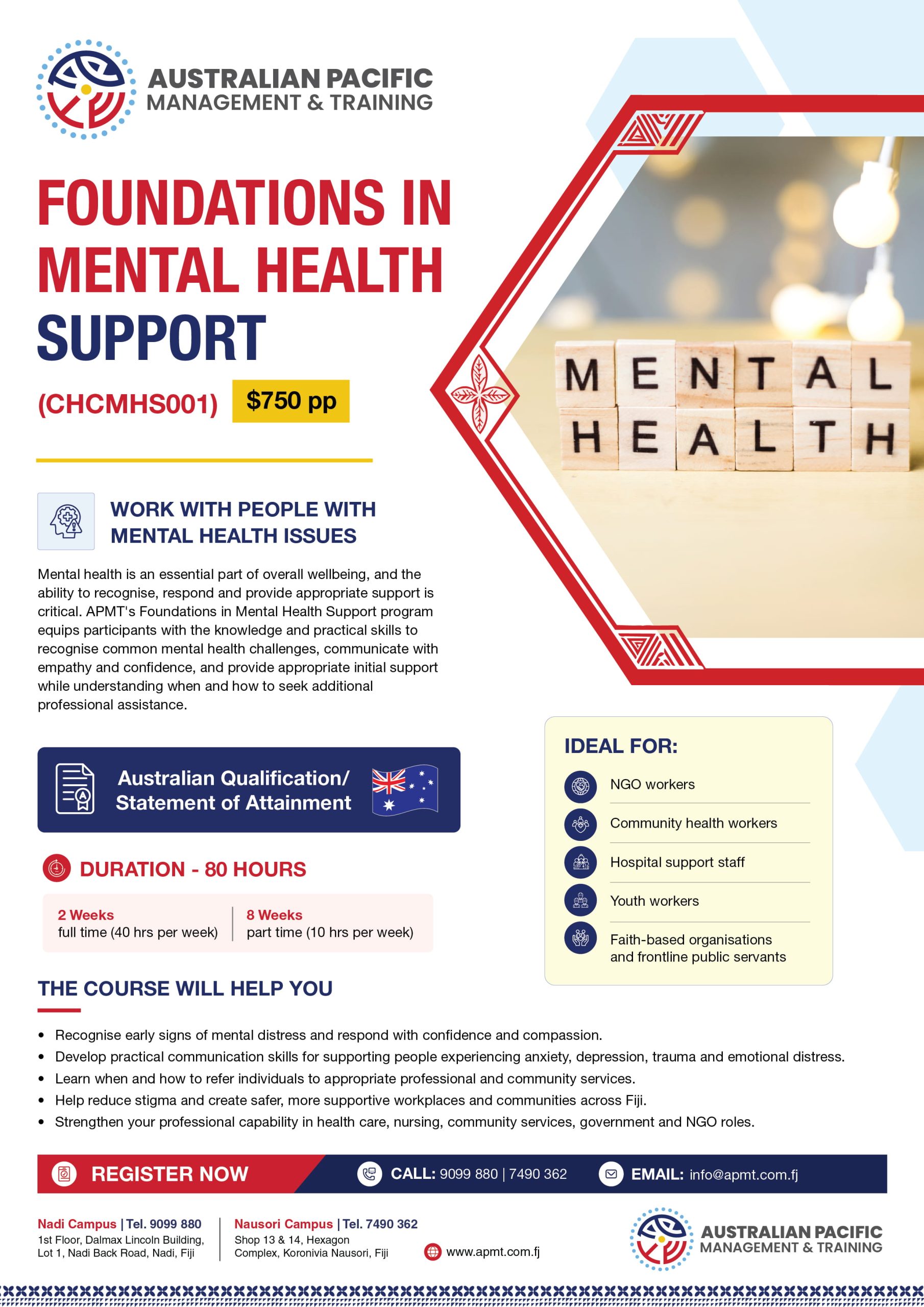
CHCMHS001 Foundations in Mental Health Support
Mental health is an essential part of overall wellbeing, and the ability to recognise distress and respond appropriately is increasingly important across frontline roles. This program develops practical knowledge, communication skills and confidence to provide initial support, recognise common mental health challenges and understand when professional or community assistance is needed.
The course will help you
- Recognise early signs of mental distress and respond with confidence and compassion.
- Develop practical communication skills for supporting people experiencing anxiety, depression, trauma and emotional distress.
- Learn when and how to refer individuals to appropriate professional and community services.
- Help reduce stigma and create safer, more supportive workplaces and communities across Fiji.
- Strengthen your professional capability in health care, nursing, community services, government and NGO roles.
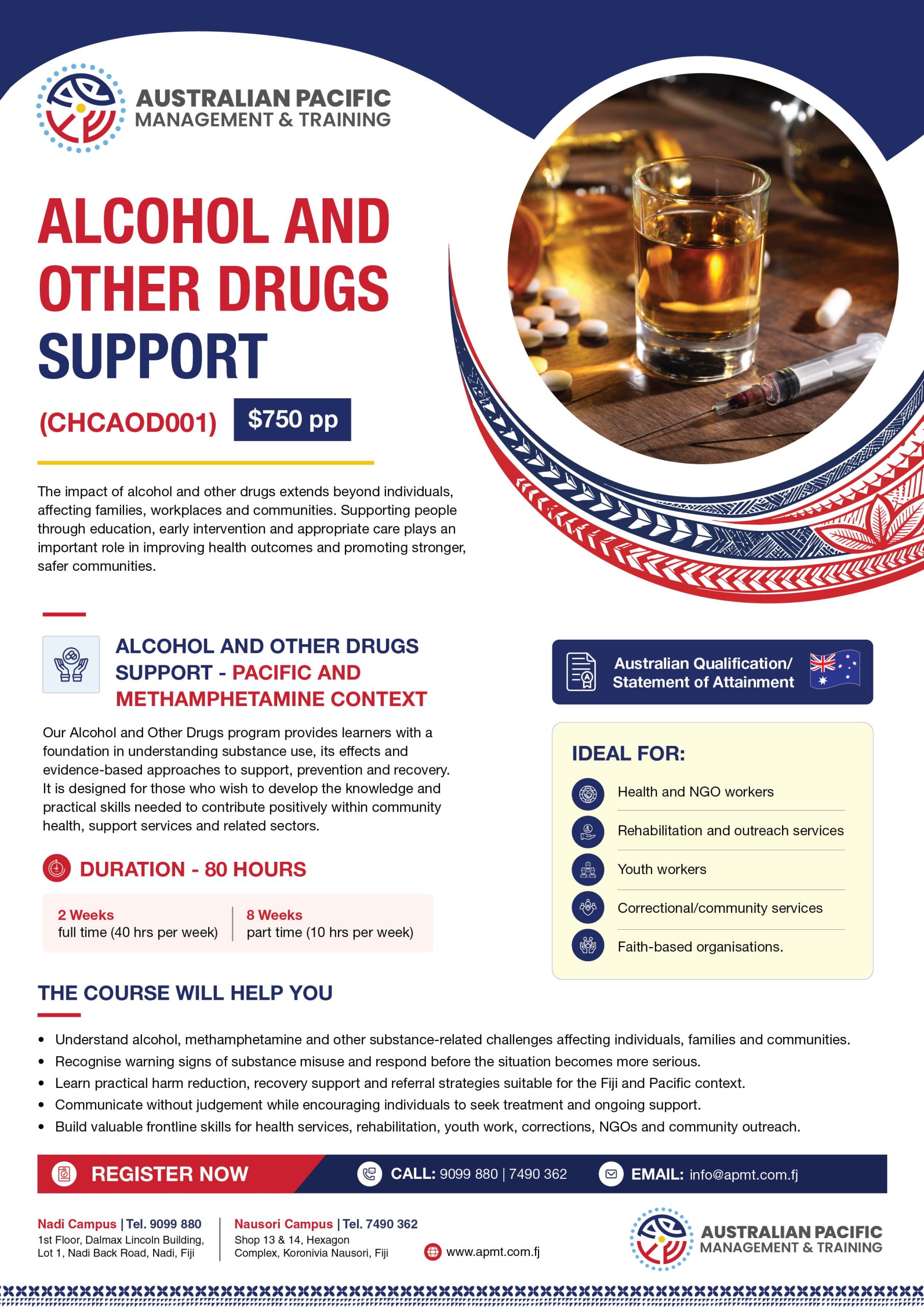
CHCAOD001 Alcohol and Other Drugs Support
Alcohol and other drug use can affect individuals, families, workplaces and entire communities. This program gives learners a practical foundation in substance use, its effects and evidence-based approaches to support, prevention and recovery, with particular relevance to Fiji and the Pacific, including alcohol and methamphetamine-related challenges.
The course will help you
- Understand alcohol, methamphetamine and other substance-related challenges affecting individuals, families and communities.
- Recognise warning signs of substance misuse and respond before the situation becomes more serious.
- Learn practical harm reduction, recovery support and referral strategies suitable for the Fiji and Pacific context.
- Communicate without judgement while encouraging individuals to seek treatment and ongoing support.
- Build valuable frontline skills for health services, rehabilitation, youth work, corrections, NGOs and community outreach.
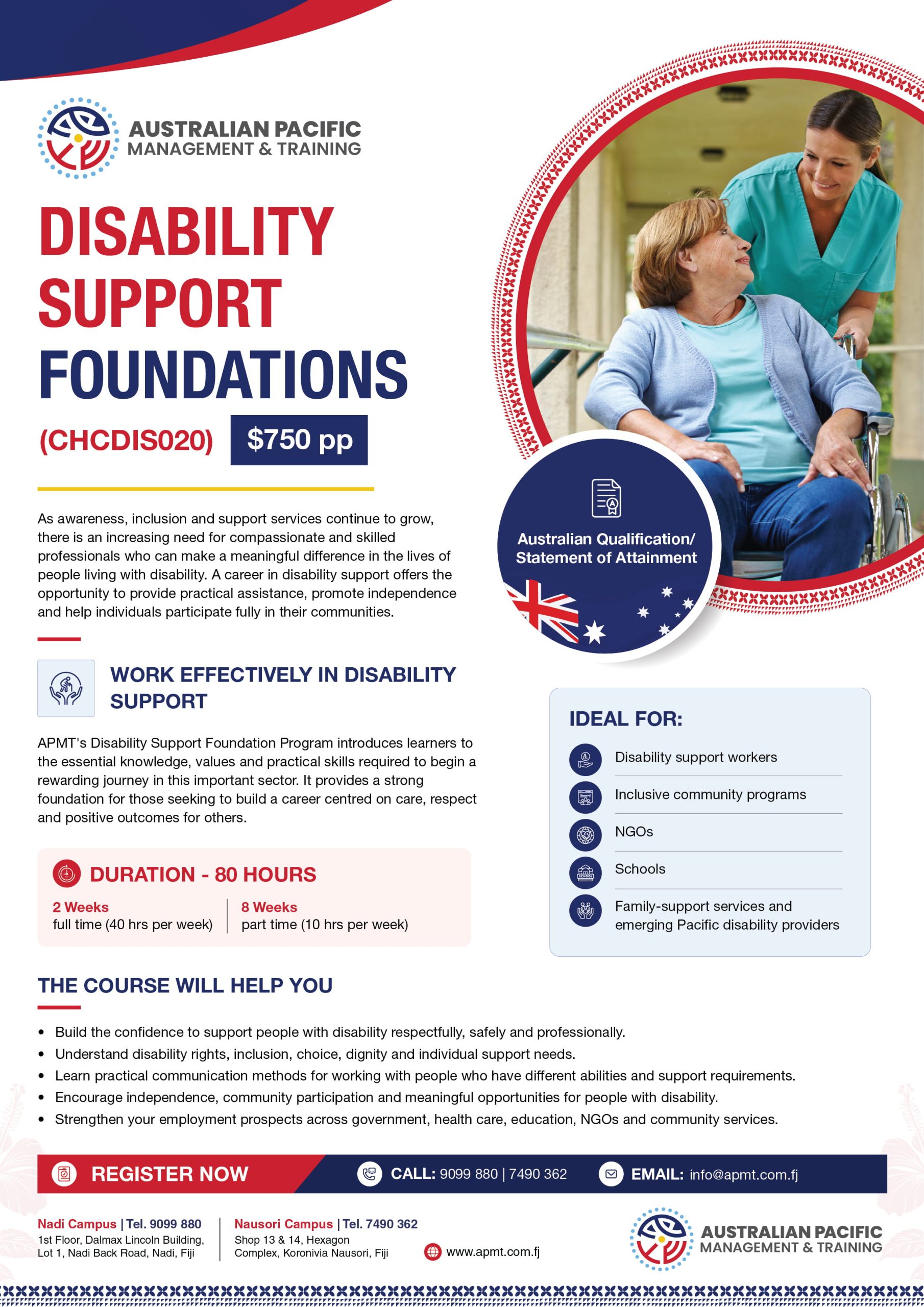
CHCDIS020 Disability Support Foundations
As awareness, inclusion and disability support services continue to grow, skilled and compassionate workers are increasingly important. This foundation program introduces the knowledge, values and practical skills needed to support people with disability respectfully and safely, while promoting independence, choice, dignity, community participation and positive outcomes across a range of support settings.
The course will help you
- Build the confidence to support people with disability respectfully, safely and professionally.
- Understand disability rights, inclusion, choice, dignity and individual support needs.
- Learn practical communication methods for working with people who have different abilities and support requirements.
- Encourage independence, community participation and meaningful opportunities for people with disability.
- Strengthen your employment prospects across government, health care, education, NGOs and community services.
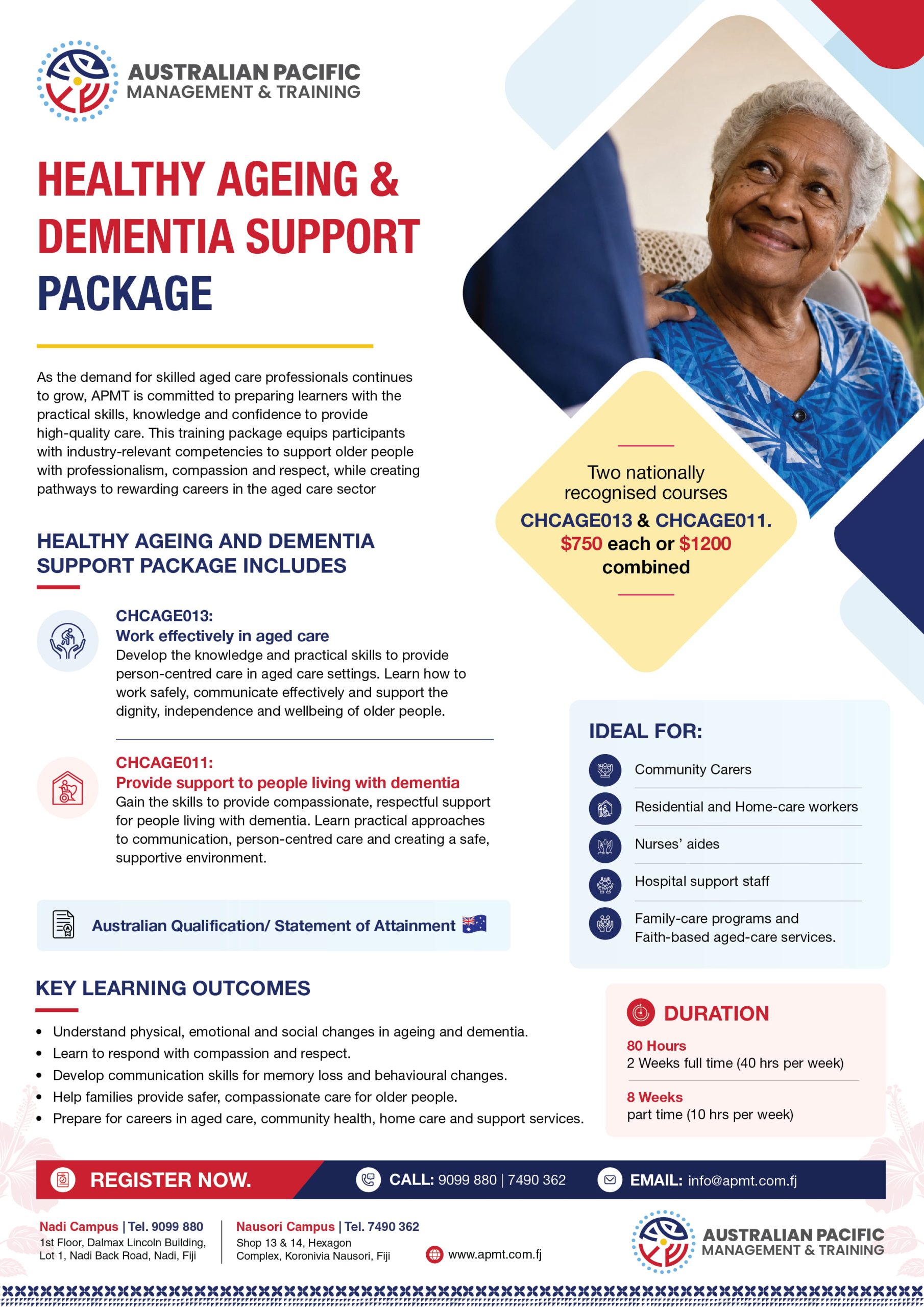
CHCAGE013 Healthy Ageing & Dementia Support Package
This two-course package develops practical capability for supporting older people with professionalism, compassion and respect. Covering effective work in aged care and support for people living with dementia, it builds knowledge in person-centred care, communication, safety, independence and wellbeing while preparing learners for meaningful roles across aged and community care.
Key learning outcomes
- Understand physical, emotional and social changes in ageing and dementia.
- Learn to respond with compassion and respect.
- Develop communication skills for memory loss and behavioural changes.
- Help families provide safer, compassionate care for older people.
- Prepare for careers in aged care, community health, home care and support services.